
Nobody can say which model saw what
Three states, and most companies are in all three.
- Staff paste company data into whatever assistant they like. Nobody can say which model saw what.
- Your product calls a hosted model API. The bill arrives monthly, and it is the first time anyone sees the number.
- A team wants to try an open-weight model. Getting drivers, serving, routing and monitoring to work together takes weeks before the first answer comes back.
One path for every model call
Your apps, agents and staff tools.
Hands on: a request
One OpenAI-compatible endpoint, with all your MCP servers and A2A Agent Cards in one place. Point your tools at it once.
Hands on: a routed call
Rules that run before a request reaches a model and before an answer reaches a person.
PreviewHands on: a checked call
Local serving: open-weight models on your GPUs, and nothing leaves the cluster. Or hosted providers: still available, now with a budget and a record.
Observability runs under all of it: tokens, latency, cost and GPU use, per team and per model.
Models, agents and skills, as your team will see them
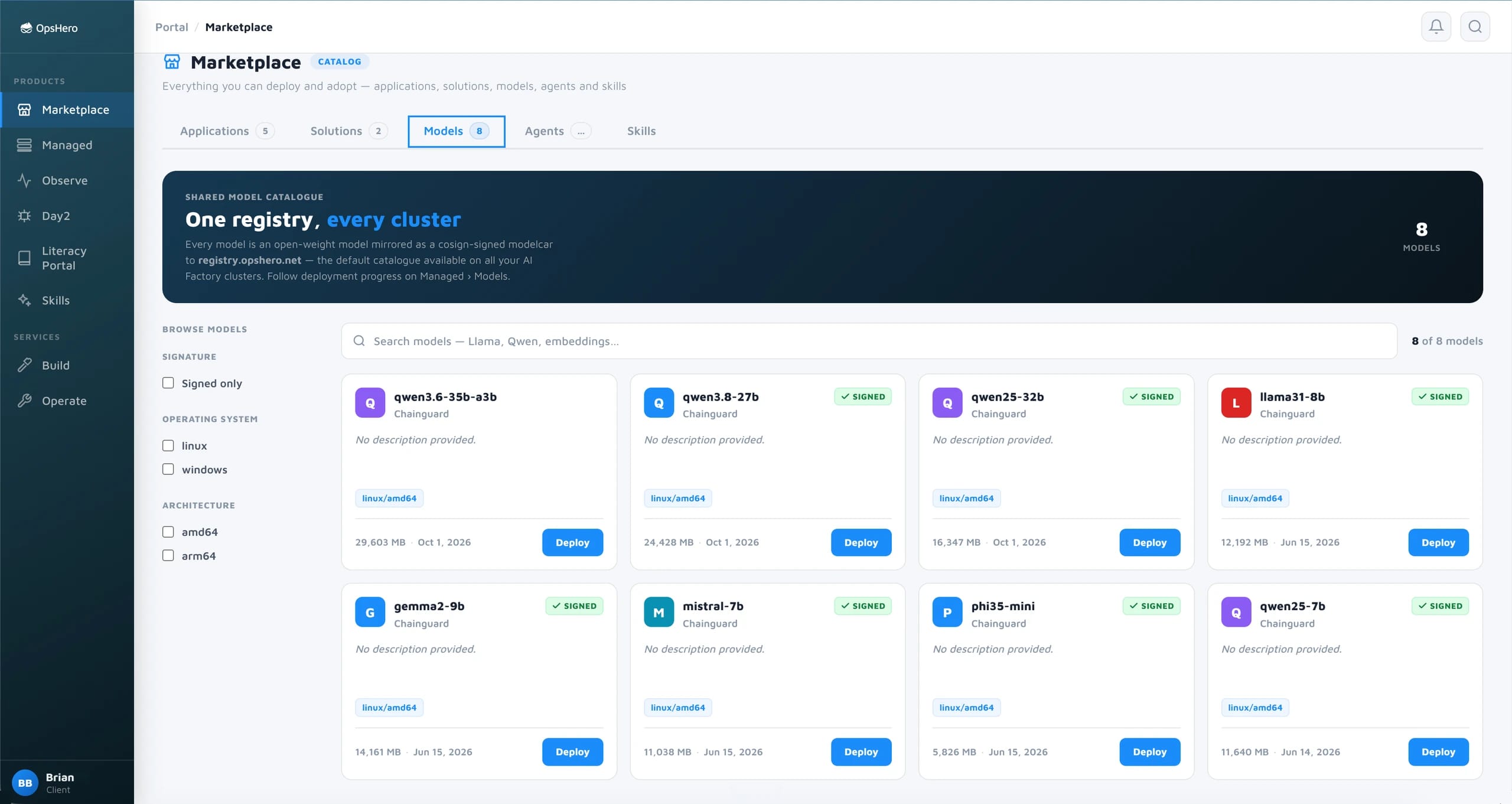
Models
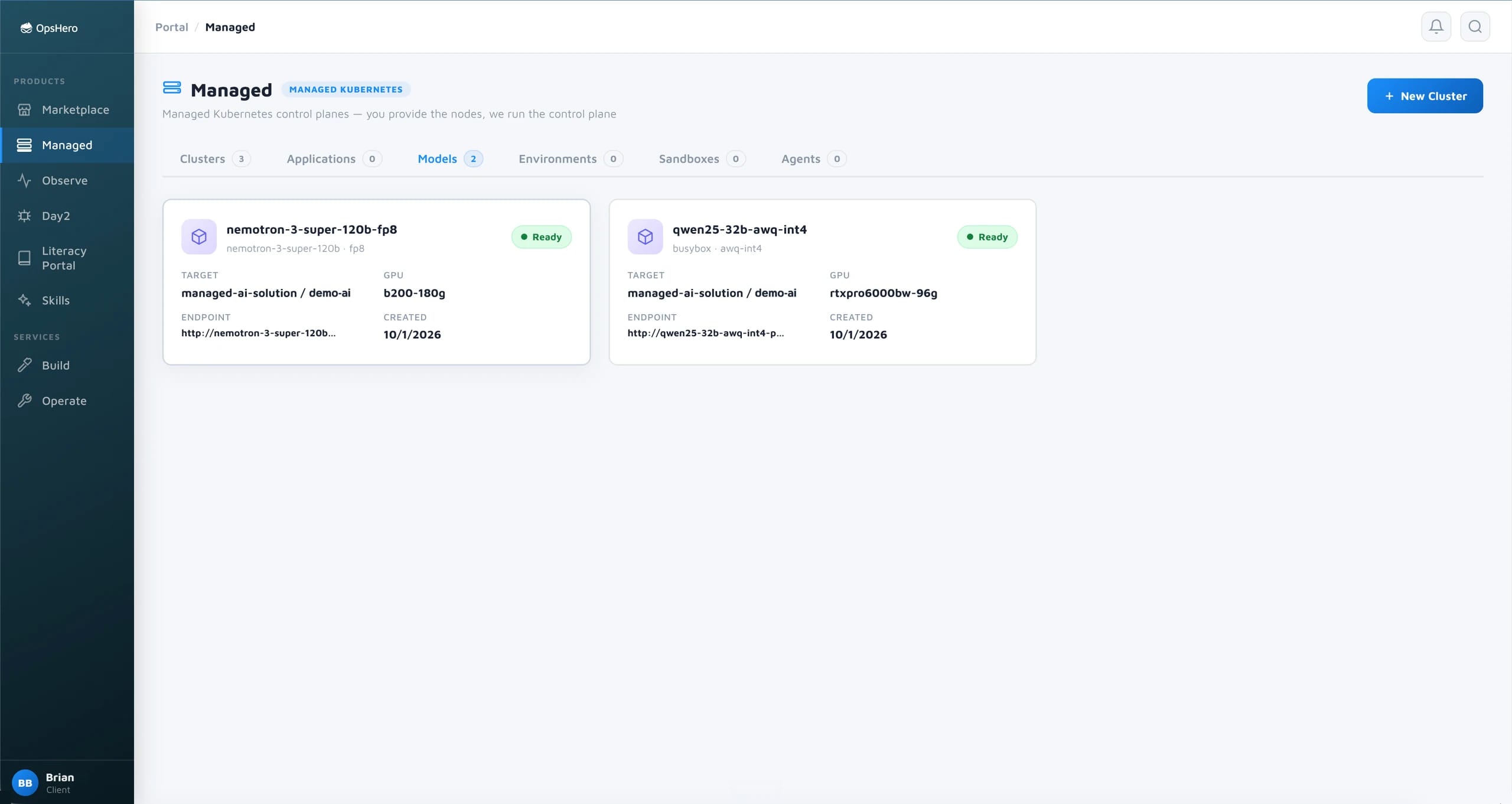
Serving

Agents

Skills
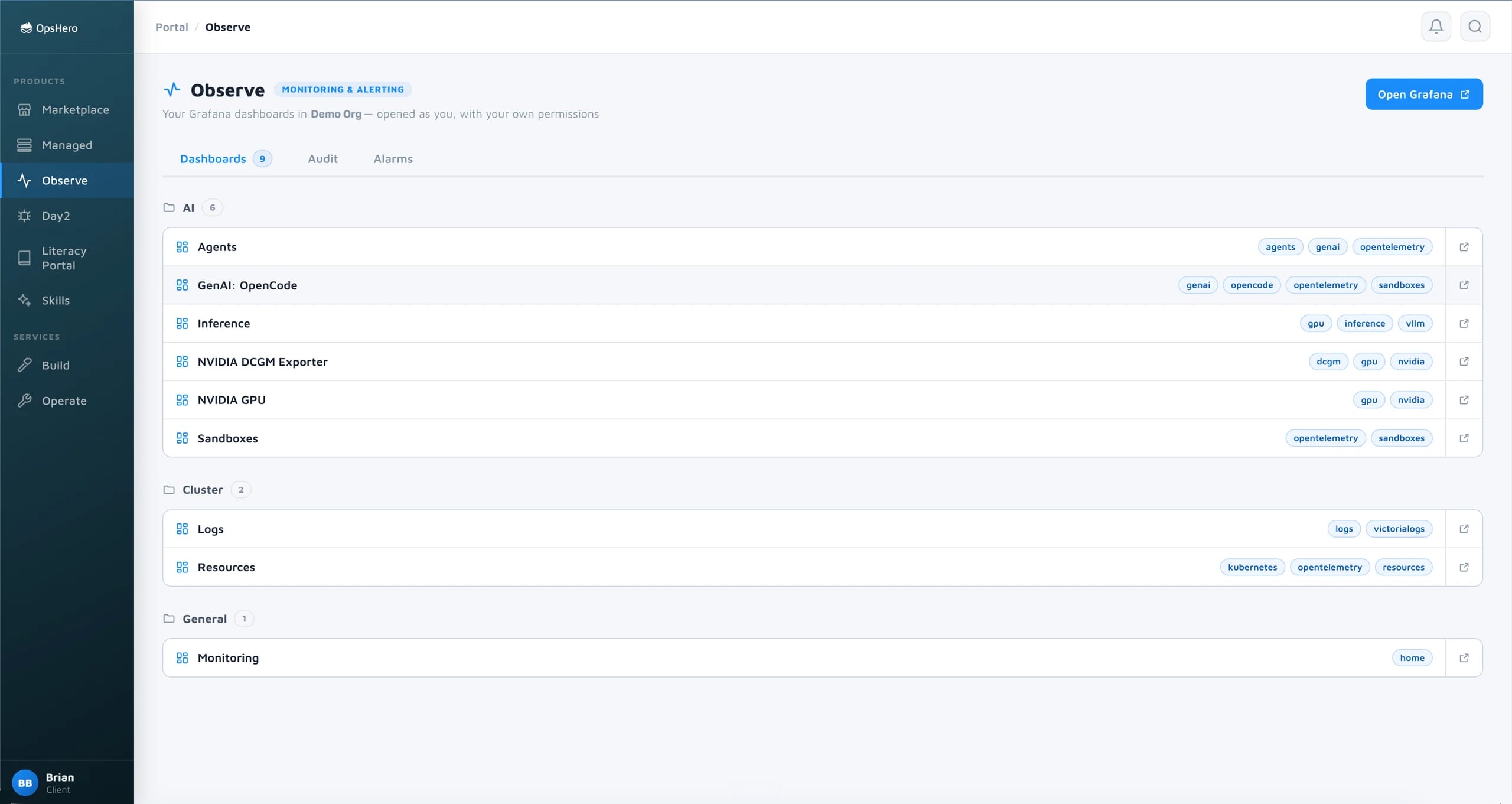
Observability
Models on your GPUs, every model behind one gateway
Models on your GPUs
Open-weight models are mirrored into one registry as signed images, so a cluster never pulls from a public hub at deploy time. Choose the model and the GPU; drivers, model distribution and serving are set up as one solution. Upload your own models to the same registry – they are visible only to you. GPU and CPU nodes can be split, so expensive GPUs serve models and nothing else.
One gateway for every model
Local models and hosted APIs behind one endpoint, with your MCP servers and A2A Agent Cards in the same place. Set budgets per team, see who spent what, fail over when a provider is slow. Moving a tool from one model to another is a routing change, not a reconfiguration of every laptop.
Your prompts to local models stay on your nodes
Prompts and answers to local models
Processed on your nodes.
Your models
In a registry scoped to you.
The GPUs
Rented, bought or already in your rack. Join them like any other node.
What we see
Gateway metadata needed to enforce budgets and show usage.
Checks on every call, and agents kept to what you allow
Agents in sandboxes
Agents run in isolated sandboxes on your own nodes, with only the access you give them: no cluster visibility, network rules per sandbox, short-lived environments drawn from a warm pool. Agents find each other and their tools through the same gateway.
Guardrails
Fast, rule-based checks catch things like card numbers or personal ID numbers on the way in or the way out. Model-based checks judge a request against your own policy. Both run at the gateway, so they apply to every tool at once.
The ones people actually ask
Do we have to stop using hosted models?
No. Most customers route both: heavy tasks to a hosted model, routine ones to a local model, with no change to the tools.
Can you fine-tune for us?
No. We serve, route, restrict and observe models; we do not train them.
Is this an OpenAI-compatible API?
Yes. The gateway is one OpenAI-compatible endpoint, for local and hosted models alike.
What does it cost?
You pay for the control plane and the Sovereign AI enablement. There are no limits on GPUs or models.
Bring one use case; leave knowing where it should run
- A model served on a GPU node, live
- Your tools pointed at the gateway
- Where your traffic would go, local or hosted, and why